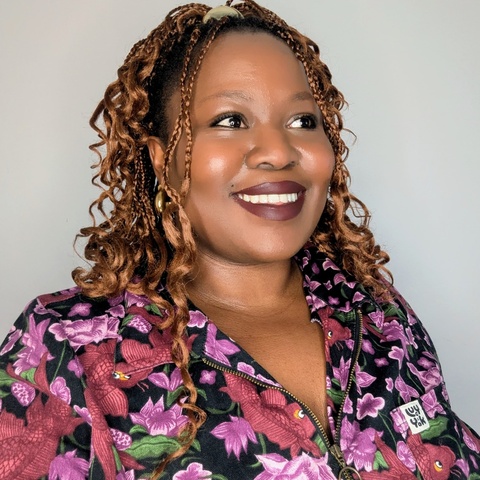
Zodwa Nyoni is a Zimbabwean-born writer and director whose multidisciplinary work spans theatre, film, radio, and opera. She first rose to prominence with her debut play, Boi Boi is Dead, which won the Channel 4 Playwrights’ Scheme and was a finalist for the Susan Smith Blackburn Prize. Since, her plays have been staged across Europe, Africa, and North America.
Zodwa has directed three short films, including the award-winning short The Ancestors. It won Jurors’ Choice for Outstanding Achievement in Filmmaking at Women of African Descent Film Festival (Brooklyn, NY); and Best Film at Sacramento Pan African International Film Festival.
She is a BAFTA Connect member and former Oxbelly International Fellow (Greece). Zodwa supports multidisciplinary artists and writers as a Lecturer in Scriptwriting at Manchester Metropolitan University and freelance dramaturg and script editor.
She was nominated by Manchester City of Literature. Her participation is made possible by a gift to the IWP from the estate of William B. Quarton.
1. Do you have a plan or project in mind for your time at the residency?
A Cobra in the House is a spy fiction set in present-day England and in the late 1970’s leading up to Zimbabwe’s independence. It follows a GCHQ trainee analyst who discovers active sleeper cells while analysing classified archives of African spies, once under surveillance by the British Empire. I want to explore black women’s roles in liberation movements, both past and present. I’m interested in what it means for them to shift between identities: girl, woman, daughter, sister, wife, mother, friend, hero, criminal, activist – spy.
2. How do you think the IWP Residency will benefit your writing craft, as well as your professional writing life?
My focus during the residency is to pivot into fiction. To date, I have worked in theatre, screen and opera. Thematically, I explore African diasporic identities, folklore, womanhood, politics, class, migration and liminality. This project carries the same themes. My goals are to explore my voice in a new medium and to begin a manuscript. I’d like to utilise the support and feedback from experts and peers. With the community, I’d like to share work, expand my professional networks and gain new opportunities.
3. What are you currently reading right now? Are you reading for research or pleasure?
For pleasure, I am currently reading The Seven Daughters of Dupree by Nikesha Elise Williams. For research, Guns and Guerrilla Girls: Women in the Zimbabwean National Liberation Struggle by Tanya Lyons.
4. What is one thing the readers and writers of Iowa City should know about you and your work?
Having been raised between Zimbabwe and England, my work frequently interrogates what it means to belong, navigating liminality and surviving systemic pressures. I began writing in slam poetry. I competed at Brave New Voices representing the UK. As I’ve moved across theatre, film, radio and TV, you can still find traces of that poetry in my writing. I am also a researcher. I enjoy finding stories in the crevices of history. I use the same methodology in all my work. Representation is important to me. Not only regarding race and gender, but also regionality. I grew up in the north of England (Yorkshire).
5. Tell us about where you are from - what are a few favorite details you would like to share about your home?
I feel like I’m from three cities. Bulawayo is my origin. Leeds shaped me; and Manchester is who I currently am. Manchester is vibrant and curious. It has a variety in its art, culture, lifestyle and landscape. The people are my favourite detail about it. You can go hiking or a concert and end up spending the time with this stranger turned friend.